
The Process of Healing
As a therapist, I often remind people that healing is not something that happens all at once. It is a process—one that unfolds in stages, often quietly, and rarely in a straight line. Many people come to therapy believing they should already be “over it,” whatever it is. But healing doesn’t begin with fixing. It begins with noticing.
Recognizing the Wound
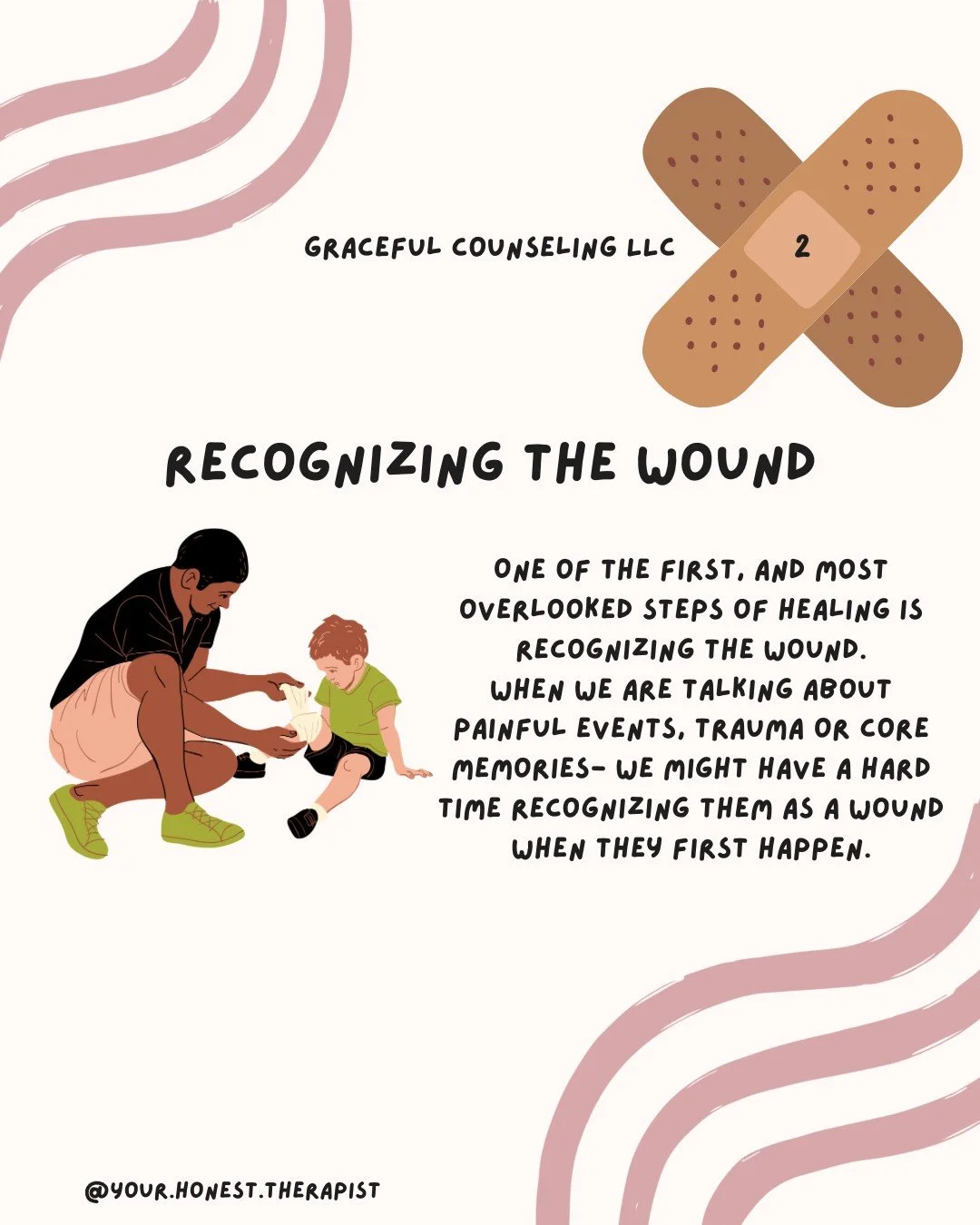
One of the first and most overlooked steps of healing is recognizing the wound. When we are talking about painful events, trauma, or core memories, we might have a hard time recognizing them as a wound when they first happen. Sometimes the pain feels normal because it’s all we’ve known. Sometimes we minimize it because others had it worse. Sometimes survival required us to keep going without stopping to acknowledge the impact.
Emotional wounds are especially easy to overlook because they don’t always show up as immediate pain. They might look like hyper-independence, emotional numbness, people-pleasing, anger, or chronic anxiety. Recognizing the wound doesn’t mean blaming anyone or reliving everything at once—it simply means allowing yourself to say, something hurt me, and it mattered.
What Gets in the Way
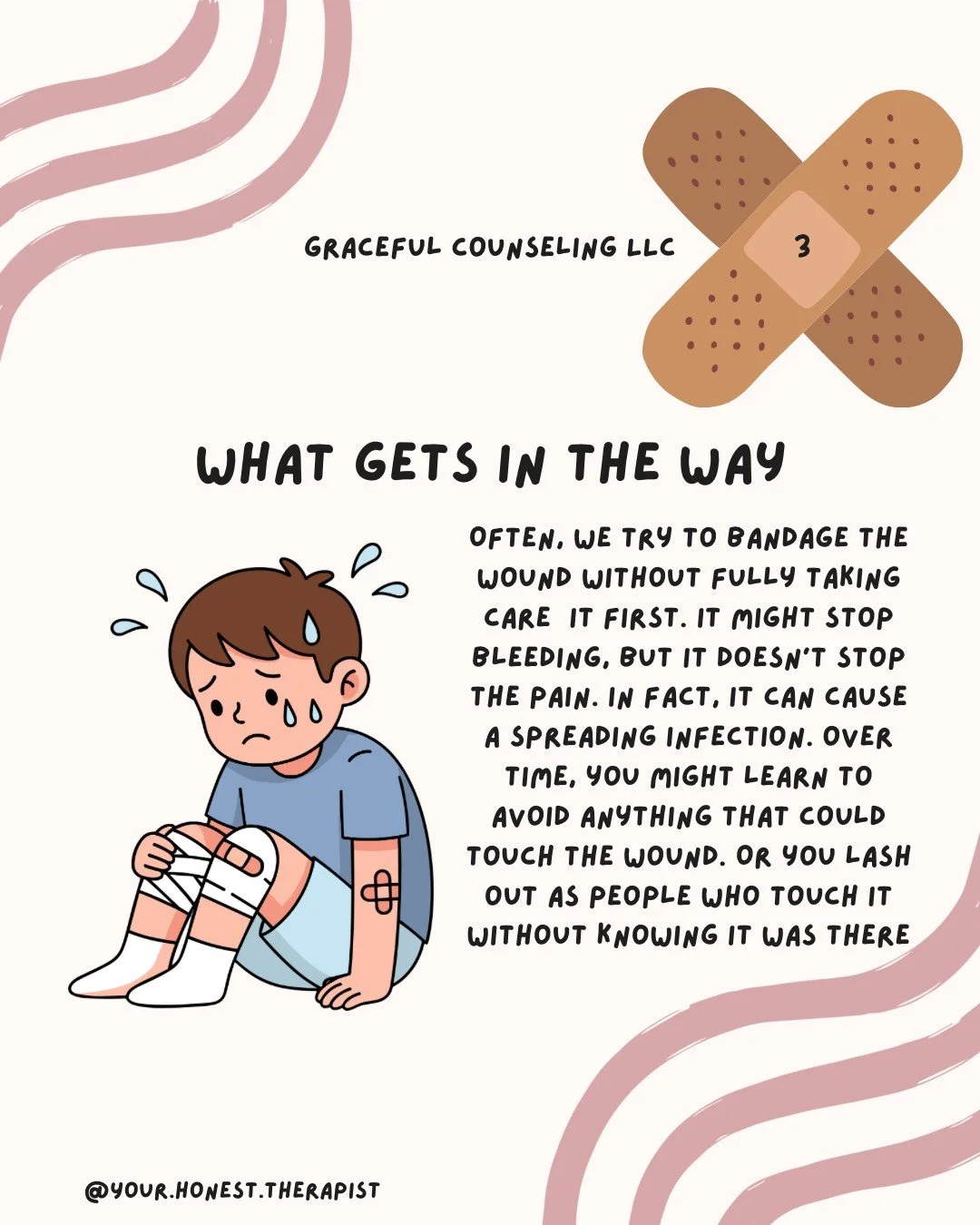
Often, we try to bandage the wound without fully taking care of it first. We find coping mechanisms that help us function: distraction, substance use, avoidance, perfectionism, humor, control, or shutting down emotionally. These strategies can be incredibly adaptive in the short term. They help us survive.
But a bandage only stops the bleeding—it doesn’t stop the pain. In fact, when a wound isn’t properly treated, it can cause a spreading infection. Over time, you might learn to avoid anything that could touch the wound, or you lash out at people who touch it without knowing it was there. Relationships become strained. Patterns repeat. The pain shows up sideways.
What gets in the way of healing is rarely weakness. More often, it’s unaddressed pain trying to protect itself.
Cleaning the Wound
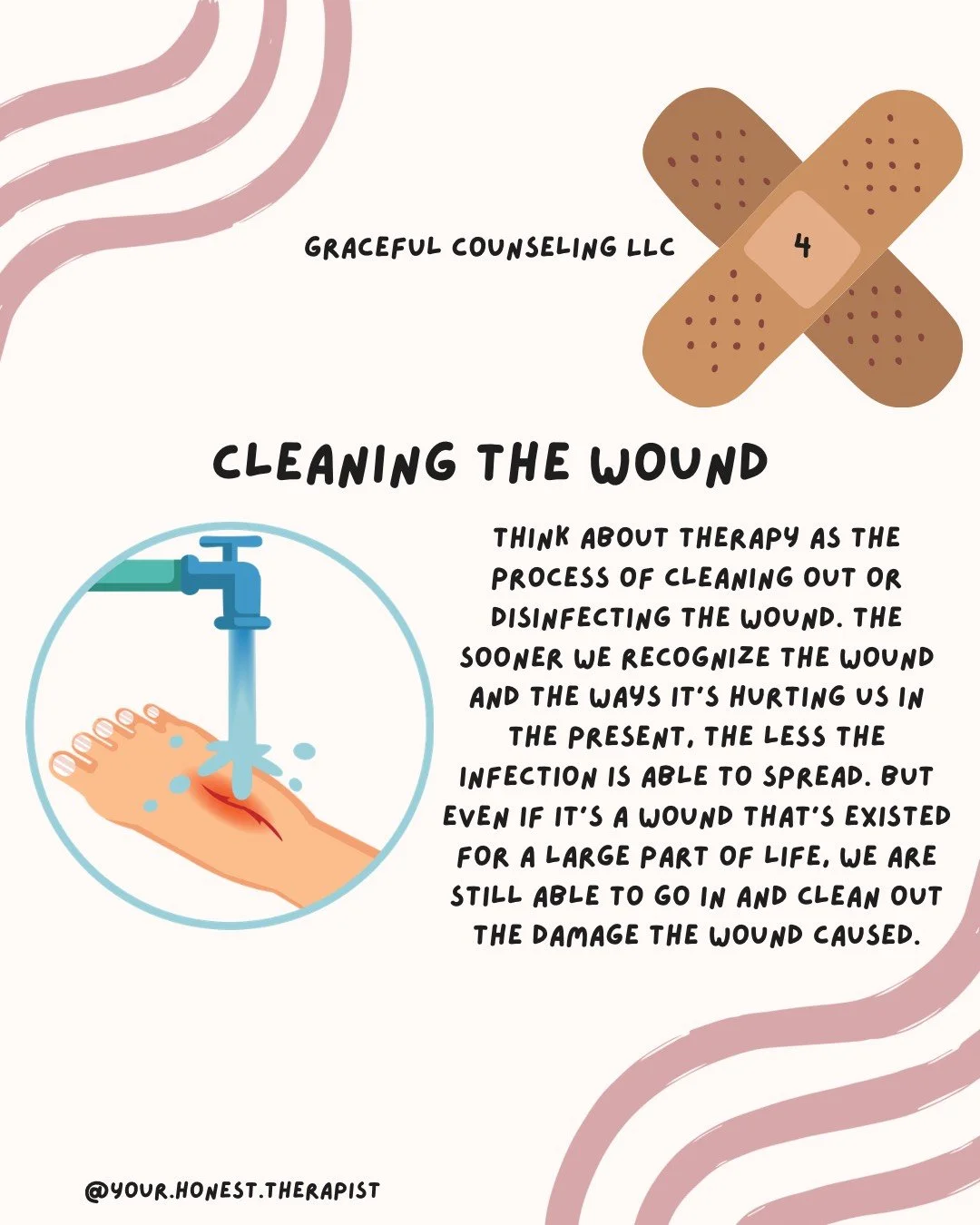
Think about therapy as the process of cleaning out or disinfecting the wound. This is often the hardest part. Cleaning a wound can sting. It requires looking at what happened, how it affected you, and how it’s still showing up in your present life.
The sooner we recognize the wound and the ways it’s hurting us in the present, the less the infection is able to spread. But even if it’s a wound that’s existed for a large part of life, we are still able to go in and clean out the damage the wound caused. Healing is not limited by how long you’ve been hurting.
This stage isn’t about reliving trauma endlessly—it’s about understanding it with safety, support, and compassion. It’s about separating who you are from what happened to you.
Healing the Wound
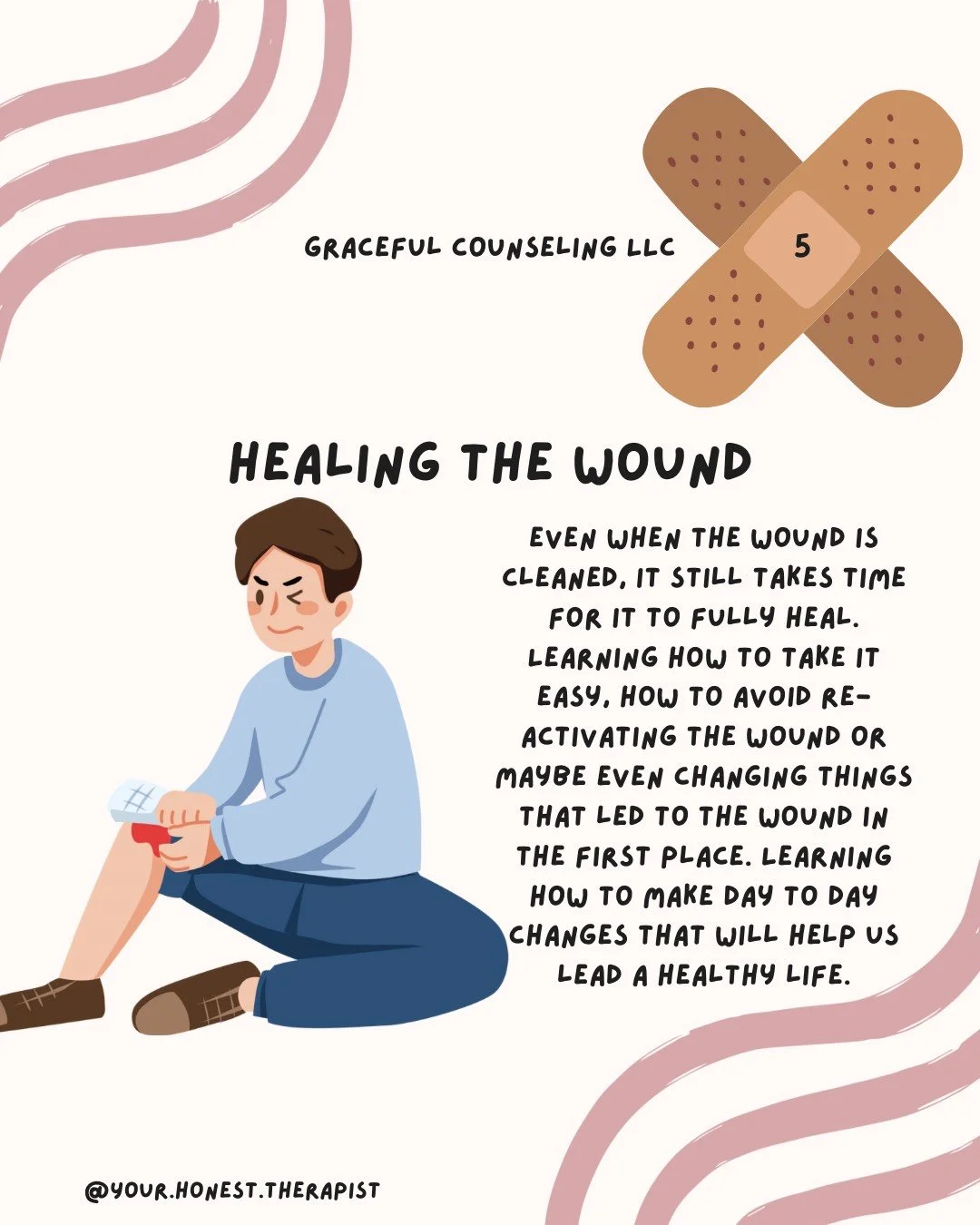
Even when the wound is cleaned, it still takes time for it to fully heal. This is where patience becomes essential. Healing means learning how to take it easy, how to avoid re-activating the wound, and sometimes changing things that contributed to the wound in the first place.
It often involves learning new boundaries, new ways of communicating, and new ways of caring for yourself. Healing happens in the small, day-to-day changes: choosing rest, noticing triggers, responding instead of reacting, and allowing yourself grace on hard days.
Progress here can feel subtle. Quiet. Sometimes boring. But this is the work that creates stability rather than quick relief.
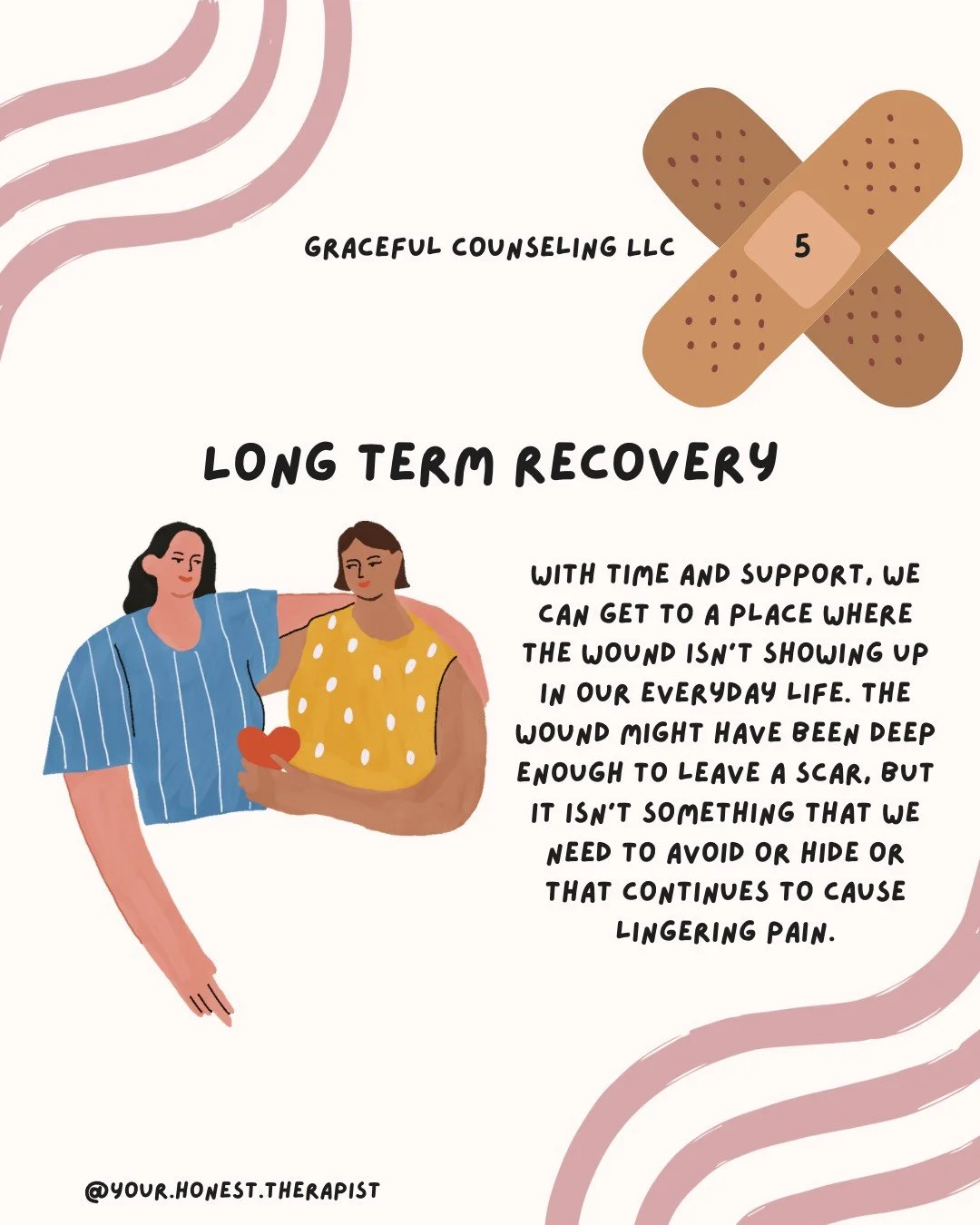
Long Term Recovery
With time and support, we can get to a place where the wound isn’t showing up in our everyday life. The wound might have been deep enough to leave a scar, but it isn’t something that we need to avoid, hide, or that continues to cause lingering pain.
Scars tell a story—not of weakness, but of healing. They remind us that something hurt and that we survived and repaired. Long-term recovery doesn’t mean the past never crosses your mind. It means the past no longer controls how you live.
You can move forward while still honoring what you’ve been through.
You can’t heal if you keep pretending you aren’t hurt.
Acknowledging pain is not giving up—it’s the beginning of taking care of yourself in a way that actually lasts.
If you are located in South Dakota or Colorado and interested in trauma services or want to begin your own individual counseling, click HERE. You will receive an email 1-2 business days after you submit this form to obtain access to the online client portal and to schedule your first appointment. If you are located outside of South Dakota or Colorado, searching for a licensed therapist on PsychologyToday can be a great first step.